Lost key, chipped key, or remote key: replacement options compared
Understanding your car key situation
Losing a car key or having one stop working can happen at the worst possible moment. Whether you are standing in a parking lot with a dead key fob or you have misplaced your only mechanical key, the right replacement path depends on what kind of key you need. Modern cars use three main types of keys: basic mechanical keys, transponder (chipped) keys, and remote key fobs. Each type comes with its own replacement process, cost considerations, and time frames. Knowing which option fits your situation can save you frustration and help you get back on the road faster.
Mechanical keys: the simplest case
If your car is older or uses a standard metal key without any electronics, replacement is straightforward. A locksmith can cut a new key by hand or by machine using the vehicle's lock code or by duplicating an existing key. This is the least expensive and quickest option. You do not need the car present if the locksmith has the code, but you will need to provide proof of ownership. Many locksmiths can cut a basic key in minutes. This type of key is still common for older models, for the glove box and trunk of many newer cars, and for some entry-level vehicles. If you have lost all copies, the locksmith may need to pick the lock or remove the ignition cylinder to determine the cuts.
Transponder keys: chipped keys with extra security
Most cars manufactured after the mid-1990s use a transponder key. It looks like a regular metal key but contains a small microchip in the plastic head. When you insert the key into the ignition, the car's immobilizer system sends a signal to the chip. If the chip responds with the correct code, the car starts. This added layer of security makes theft harder, but it also complicates replacement. You cannot simply cut a new blade; the chip must be programmed to match your vehicle. A locksmith can cut a new transponder key and program it on-site in many cases. The process requires specialized equipment to read the car's immobilizer system and write the correct code to the new chip. For some vehicles, especially European models, the programming may require the presence of a working key. If all keys are lost, the locksmith may need to access the vehicle identification number (VIN) and use dealer-level tools to generate the code. This takes longer and costs more than a simple key cut, but it is still often faster and less expensive than going through a dealership.
Remote key fobs: keys that unlock and start from a distance
Remote key fobs have become the standard for many modern vehicles. They combine the functions of a transponder chip with remote locking, unlocking, and sometimes remote start. The fob communicates with the car via radio frequency. When you press a button, the car receives the signal and responds. If your fob is lost, broken, or stops working, you have a few options. A locksmith can replace most fobs, but the process is more involved. The locksmith must first obtain a compatible fob for your make and model. Then the fob must be programmed to communicate with your car's receiver. Some fobs also include a physical emergency key blade hidden inside, which can be cut separately. Programming a fob often requires special software and a direct connection to the car's computer through the diagnostic port. For some vehicles, the locksmith can do this at your location. For others, the car may need to be brought to a shop. If the fob is completely dead and you have no working key, you may need car lockout assistance to gain entry first. Many locksmiths offering mobile car lockout assistance can also handle fob programming on the spot, combining two services into one visit.
When you need car lockout assistance
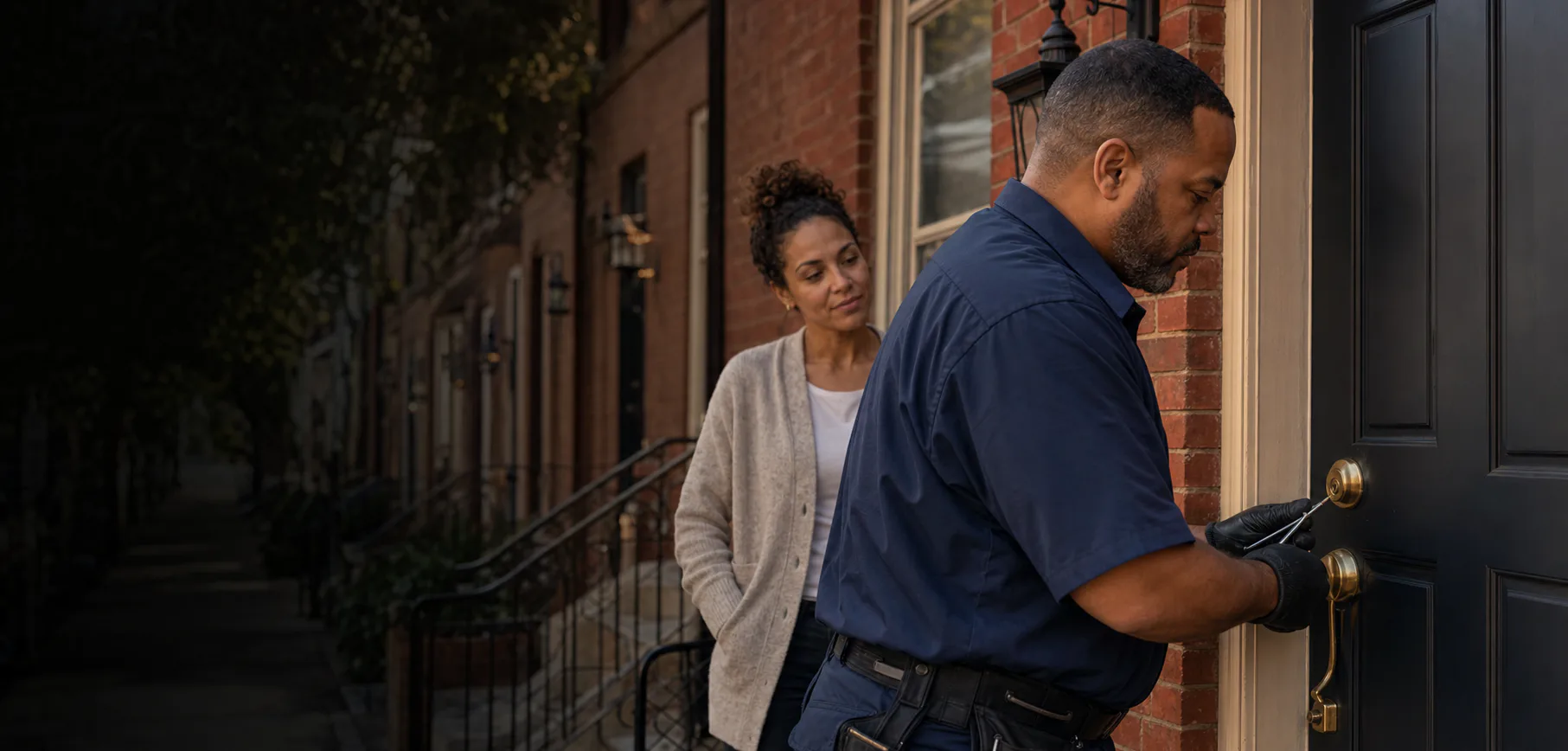
Being locked out of your car is a different problem from having a lost or broken key, but the two often overlap. If your key is inside the car or lost entirely, you may need someone to open the vehicle before you can think about a replacement. Car lockout assistance typically involves a locksmith using specialized tools to unlock the door without damaging the vehicle. Once you are inside, the locksmith can evaluate what type of key you need and begin the replacement process. This is a common scenario for people who have locked their only key in the trunk. The locksmith opens the car, then cuts and programs a new key. Some locksmiths advertise combined lockout and key replacement services. In Philadelphia, many residents and visitors rely on RR Locksmith Services for this exact situation: a single call that covers both unlocking the car and making a new key. Having one provider handle both steps saves time and avoids the need to coordinate two separate appointments.
Key programming: what it involves
Key programming is the process of pairing a new key or fob with your car's immobilizer and remote systems. Not all locksmiths can program every make and model. The equipment required varies by manufacturer and year. For some cars, programming is straightforward and can be done in a few minutes. For others, it may require access to online databases or dealer-level software. The locksmith may need to connect a programmer to the car's onboard diagnostic port (OBD-II) and follow a series of steps. If you have a working key, the process is usually faster because the locksmith can use it to authorize the new key. If all keys are lost, the locksmith must use the vehicle's VIN to obtain the correct code from the manufacturer or a third-party provider. This can add time and cost. In all cases, proof of ownership is required. The locksmith will ask for your driver's license, vehicle registration, or title to ensure you are the rightful owner.
Choosing between a locksmith and a dealership
Many car owners assume that only a dealership can make a new key, especially for newer vehicles with advanced electronics. That is not always true. Independent locksmiths invest in the same programming tools as dealers for many common brands. The main advantages of using a locksmith are convenience and speed. Locksmiths often come to your location, and they can usually complete the job in less time than a dealership appointment. Dealerships may require you to tow the car to them, wait for a part to arrive, and pay higher labor rates. However, for some luxury or rare vehicles, the dealership may be the only option if the locksmith does not have the necessary equipment or authorization. It is worth calling ahead to ask whether the locksmith can handle your specific make and model. A good locksmith will be honest about their capabilities.
What to do if your key fob stops working
A key fob that stops working does not always mean it is broken. The first step is to check the battery. Most fobs use a small coin-cell battery that can be replaced in seconds. If the fob still does not work after a new battery, the issue could be a damaged circuit board, a broken contact, or a loss of programming. A locksmith can test the fob and determine if it can be repaired or if it needs replacement. If the fob is lost entirely, the locksmith can also delete the lost fob from the car's memory so that it cannot be used to access the vehicle. This is an important security step that many people overlook. If you have a spare fob, the locksmith can program a new one using the spare as a template. If not, the process is the same as for a full replacement.
Preparing for a key replacement visit
Before a locksmith arrives, have your proof of ownership ready. This usually means your driver's license and the vehicle's registration or title. If the car is registered in someone else's name, that person may need to be present or provide authorization. For remote or chipped keys, knowing the vehicle identification number (VIN) can speed things up. The VIN is typically visible through the windshield on the driver's side dashboard, or on a sticker inside the driver's door frame. If you are dealing with a lockout first, the locksmith will need to unlock the car before they can work on the key. In that case, be prepared to show proof of ownership at the time of the lockout. Many locksmiths will ask for it before they begin. In Philadelphia, companies like RR Locksmith Services include this verification step as part of their standard procedure for both lockout and key replacement calls.
Planning ahead to avoid future problems
Once you have a working key again, it is wise to make a spare. Having a backup key stored at home or with a trusted person can prevent a future lockout or loss from becoming a major hassle. For cars with transponder or remote keys, a spare also means that programming a new key later will be faster and cheaper because the locksmith can use the spare to authorize it. Some locksmiths offer to cut and program a spare at the same time they make your replacement. The cost is usually lower than coming back later. It is also worth keeping the key fob away from extreme heat or moisture, as these can damage the electronics. A simple key ring or pouch can help protect it. If you have a key that only works for the door but not the ignition, or vice versa, that is a sign the transponder chip may be failing. Replacing it early can save you from being stranded.
Making the right call for your situation
The best replacement option depends on the type of key you need, whether you are locked out, and how quickly you need to be mobile. For a simple mechanical key, a local locksmith is usually the fastest and most affordable choice. For a chipped or remote key, a locksmith with the right programming equipment can often match the dealership's capabilities at a lower cost and with mobile service. If you are locked out, car lockout assistance combined with key replacement is the most efficient route. Knowing what to expect and having your documents ready can make the process smoother. Whether you need a basic cut, a chipped key programmed, or a full fob replacement, there are professionals available who can handle the job without the wait or expense of a dealership trip.